
NO LNG
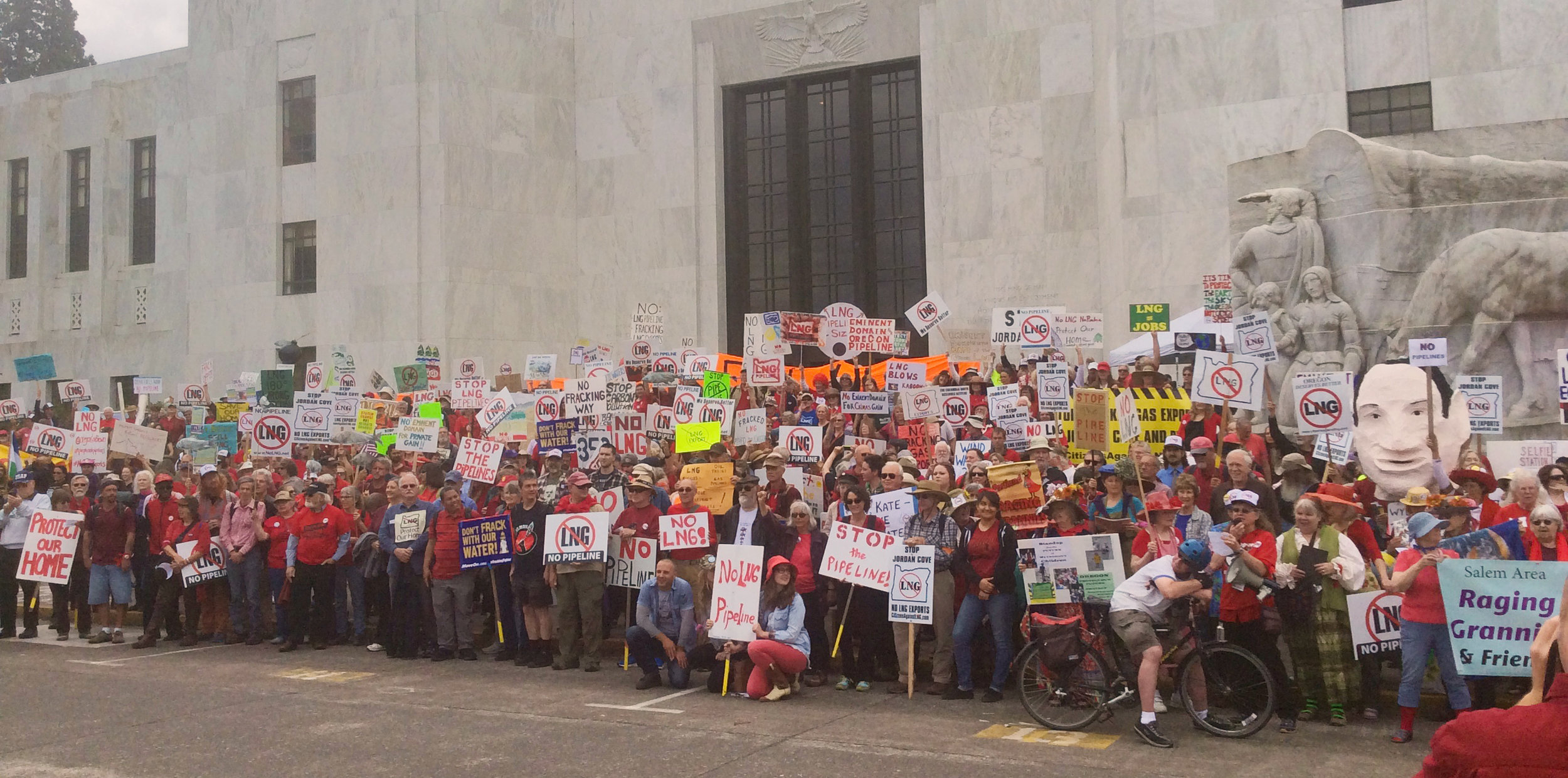
In 2005, energy companies — including California-based PG&E — proposed the Jordan Cove liquefied natural gas (LNG) terminal as an import facility in Coos Bay, Oregon, along with the 235-mile Pacific Connector pipeline. The plan was to import fossil fuels to Oregon and pipe the gas to California.
Recently, due to changing market conditions including a boom in fracking Western public lands, the Jordan Cove LNG project has announced its intentions to export domestic natural gas through the proposed terminal and pipeline. The Pacific Connector pipeline, were it constructed, would then ship that gas from a pipeline in Malin, Oregon out of Coos Bay to our overseas economic competitors and in doing so, raise our gas rates at home.
Exporting domestic supplies of natural gas would increase our gas prices at home, all while harming private landowners, rivers, fish, wildlife and forests in Southern Oregon. Perhaps worst of all, Oregon and the U.S. would be committing to decades of fossil fuel use at a time when the climate crisis demands we get all new energy from clean sources like wind and solar.
A coalition of conservationists and fish advocates is challenging the federal approval of this project, as well as a variety of county, state and federal permits required for this project to proceed. The State of Oregon has a lot of power as the authority in granting—or denying—several permits.
Quick facts:

Who is behind this project proposal?
Jordan Cove LNG terminal is a project proposed by a Canadian company, Veresen. The Pacific Connector Gas Pipeline is a project of the Oklahoma-based Williams Companies and California-based PG&E Corporation.
Where would the pipeline run?
The 235-mile, 36-inch high pressured gas pipeline would originate at the proposed Jordan Cove LNG terminal in North Bend, then cross through Coos, Douglas, Jackson and Klamath Counties, ending at Malin, Oregon.
How are public lands impacted?
Approximately 80 miles of the pipeline would cross public land and 150 miles would cross private land. The pipeline would directly impact 280 acres on the Rogue River National Forest. Of that 104 acres is old-growth. The pipeline would create a linear 90-foot wide, 235-mile long clearcut. The habitat fragmentation would be a serious blow to wildlife across the region.
On top of all this, the Pacific Connector Gas Pipeline would cross 379 waterbodies, including the Umpqua, Klamath and Rogue Rivers.
How are private landowners impacted?
Over 300 private landowners are threatened with the use of eminent domain for the pipeline right-of-way. Landowners would likely receive a small one-time payment for the pipeline running across their property, while they would lose access and endure limitations on that right-of-way such as: an inability to plant crops with deep roots, lack of access with heavy equipment, and a clearing of all brush and trees. A majority of impacted landowners are opposed to the project.
Who authorizes this project?
This is a complicated question because there are a lot of permits the company has to acquire at federal, state, and county levels. The Federal Energy Regulatory Commission has already given Jordan Cove LNG a certificate, however that is being challenged by a coalition of groups and individuals, including the state of Oregon. The state of Oregon will process applications for use of state lands, impacts to waterbodies, and the dredging proposal at Coos Bay.